I have a leak sensor under the dishwasher. I have a contact sensor on the back gate that tells me when the wind blows it open. I have a graph — an actual graph, with a line on it — of the temperature in my guest bedroom, a room I enter maybe eleven times a year.
I was looking at that dashboard on a Tuesday night in October when it occurred to me that I could tell you the humidity in my garage to one decimal place, and I could not tell you a single thing about what was in the air in the room I was sitting in.
That bothered me more than it probably should have.
I forecast inventory for a regional grocery chain. My job is essentially professional distrust of anecdotes — somebody's always certain a product is selling well, and then you pull the numbers and it isn't, it just happens to be stocked near the door. Eleven years of that. I don't have opinions anymore, I have queries.
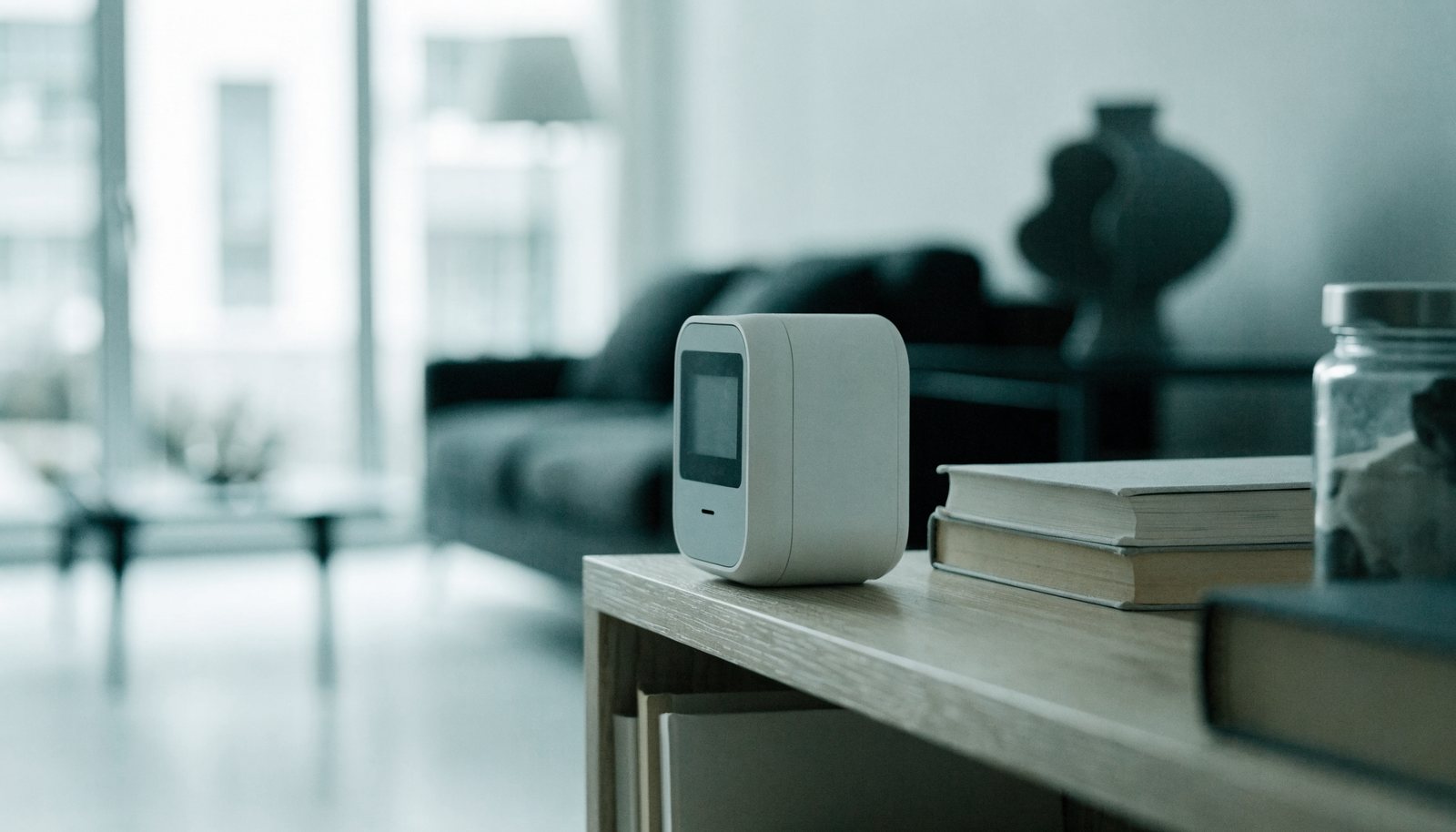
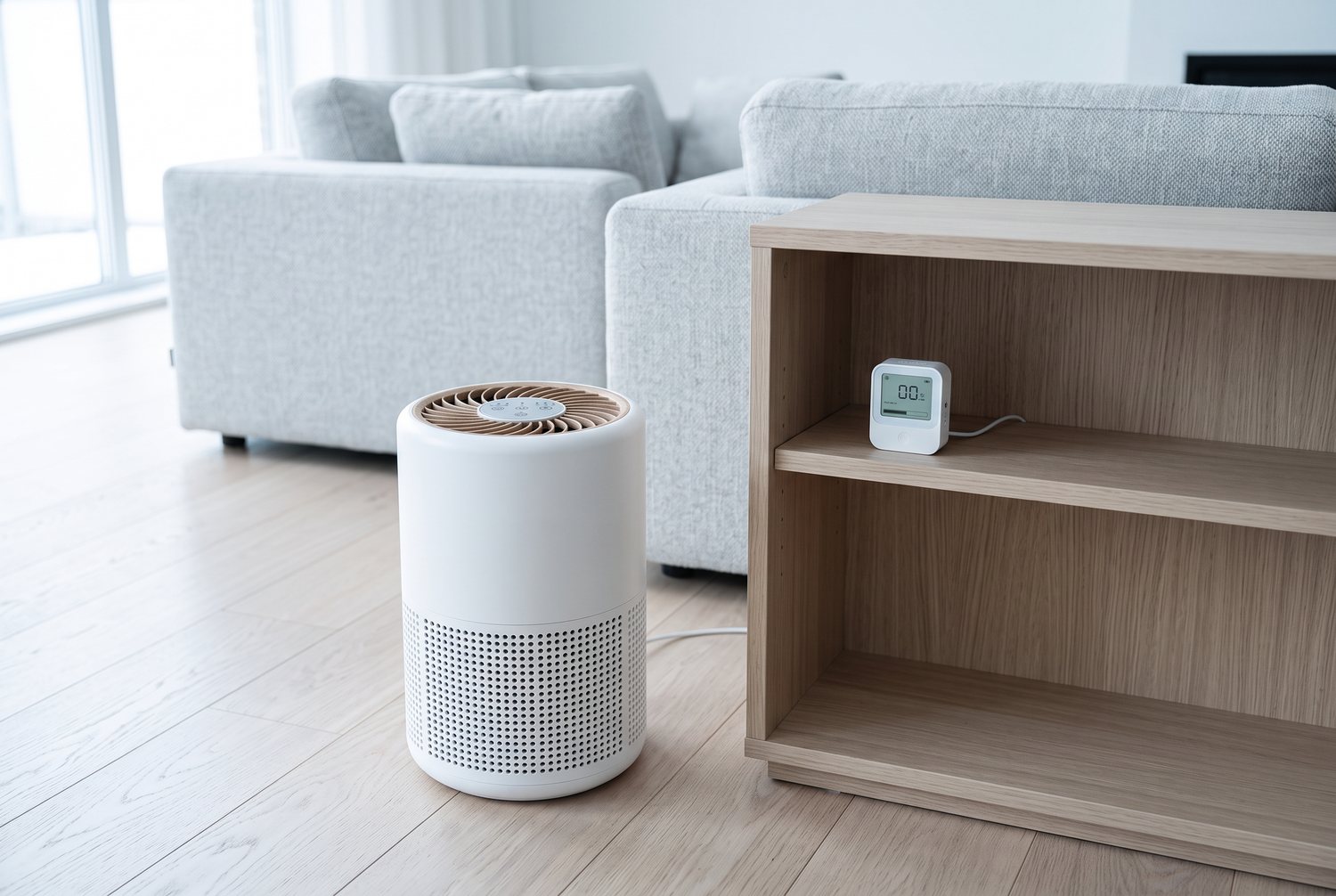
So I bought an instrument. One hundred seventy-nine dollars and ninety-five cents. A particulate monitor that reads PM2.5 and PM10, logs to an app, and sits on a shelf minding its own business.
I put it on the bookcase in the living room and left it there for three weeks.
What I learned is not the thing you're expecting. It wasn't that the number was high. It was that the number moved.
What actually moves the needle
I started keeping notes, because a spike with no annotation is useless. Three weeks of this. My friends found it insufferable and I found it fascinating, which is roughly the arrangement my entire life has always had.
Vacuuming: up, immediately, and by a lot. Which felt like a betrayal.
Making toast: up. Every time. Not smoke, not burning — just toast.
The cats jumping down off the back of the couch: a small, reliable bump you could set your watch to.
Changing the sheets: the biggest single spike I recorded in twenty-one days, which I still think about.
None of that surprised me, exactly. Dust exists. Cooking makes particles. I knew that in the abstract, the way everyone knows it.
What surprised me was the second half of every one of those shapes. The recovery.
Ninety seconds to spike. Then two hours, three hours, sometimes closer to four, for the line to come back down to where it started. On a still day with the windows shut, my living room took most of an afternoon to return to its own baseline after I ran a vacuum across it for six minutes.
That's the thing I couldn't unsee. Not that the air in my house was bad — I want to be careful here, because I'm not qualified to tell you what any of these numbers mean about anything.
It's that the room had no mechanism for fixing itself. It just sat there, slowly, waiting.
I have a dehumidifier because a room can't dry itself out. I have a thermostat because a room can't hold its own temperature. I had somehow never once thought about the fact that a room can't clear its own air either — and that every house I've ever lived in has been quietly relying on time and luck.
The three things I tried first
I did not go buy an air purifier. I want to be clear about that, because it would have been the sensible move and I didn't make it.
I'm cheap, and I had an instrument, and having an instrument makes you want to run experiments. So I ran experiments.
01 — Opening the windows
This is the free option and everybody's first suggestion, and it works. Genuinely. Open two windows on opposite sides of the house and the line drops faster than anything else I tried, including the thing I eventually bought.
It also stops working the moment you close them. I live in Sacramento, where roughly a third of the year opening the windows means inviting in whatever the valley is doing that week, and where in January it means being cold, which I am unwilling to be.
The other problem is that the fix requires me. It only happens if I remember, and I'm asleep for a third of my life.
Verdict: best result per dollar of anything I tested. Completely useless as a system.
02 — Upgrading the HVAC filter
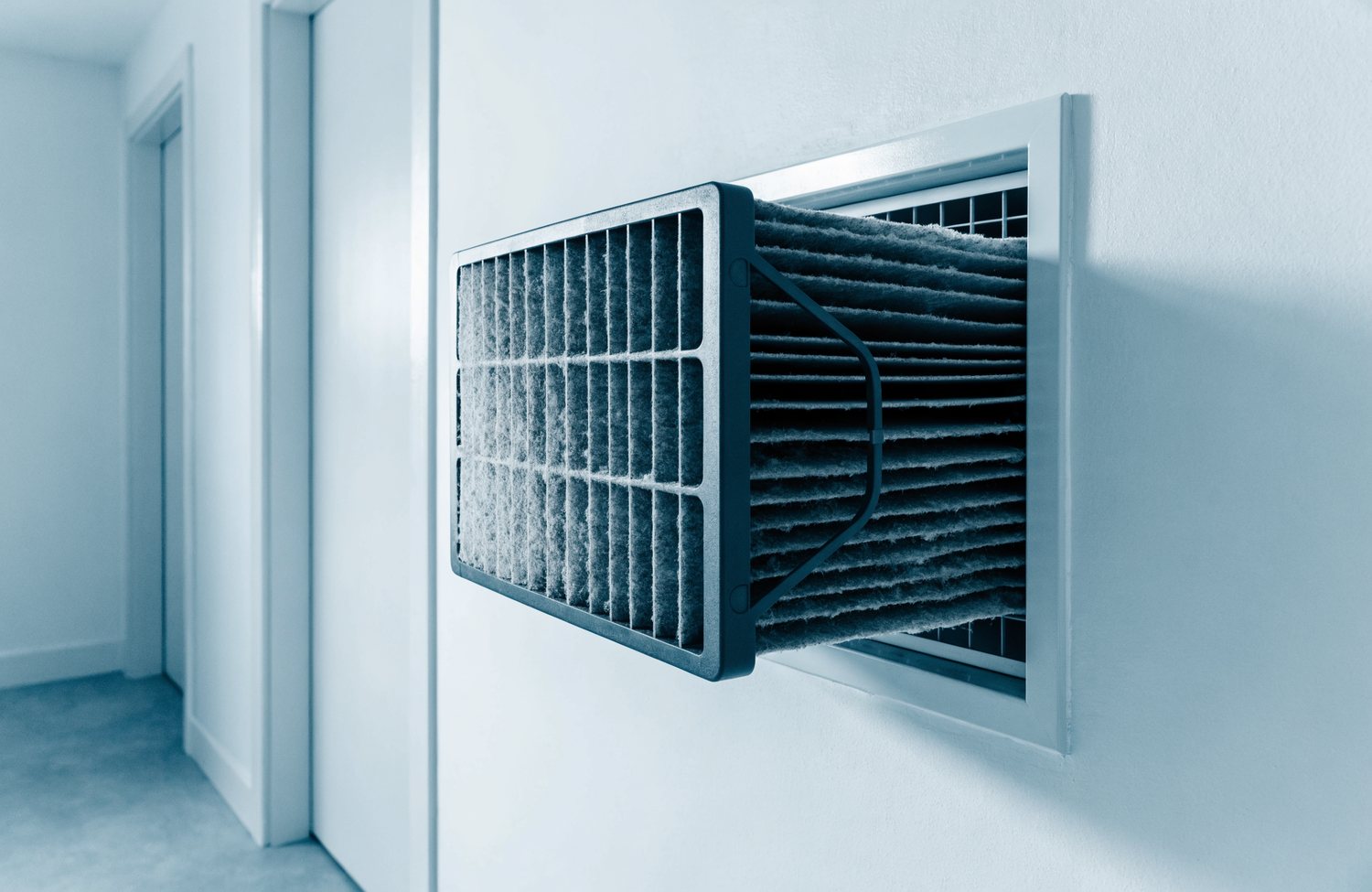
This felt like the smart-person answer. Buy the better pleated filter, let the system that already exists do the work.
It did help. The whole-house baseline came down a little over the following ten days — not dramatically, but the flat parts of the graph got flatter.
Two things I didn't know before I tried it. First, an HVAC filter only does anything while the system is actually running, and in October in Sacramento mine runs about eleven minutes a day. Second, denser filters restrict airflow, and there's a real limit on how dense a filter you can put in a residential system before the blower is working harder than it was built to. I called the guy who services my furnace about this and he was very clear that I should not go past what the manual says.
Verdict: worth doing, helps the house, did nothing measurable for the specific room I sit in for five hours a night.
03 — The $28 desk unit
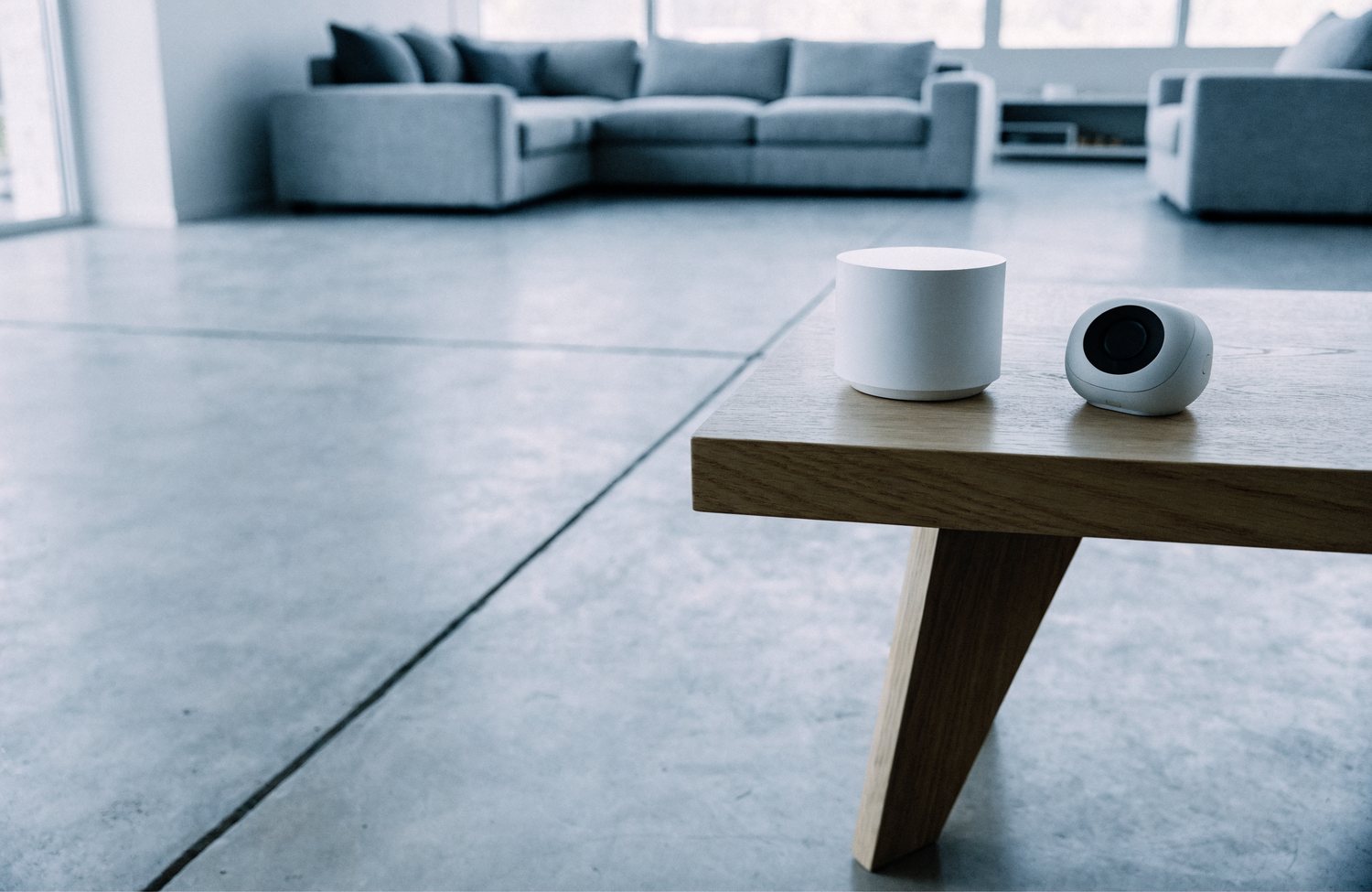
I bought the cheapest thing with the words "air purifier" on it because I wanted to know whether the category was real or whether it was all marketing.
It was not real. Not at that price.
I put it eighteen inches from the monitor, ran it on high for two hours, and the line did not care. It moved air — you could feel it with your hand — but "moving air" and "moving enough air to change a room" turn out to be very different quantities.
Verdict: the most useful $28 I spent, because it taught me the number that actually matters.
What I finally understood I was shopping for
I made a list. This is what my job has done to me.
covered
per hour
forget it's on
It has to work on the room I'm in, not the house in general. It has to run without me — overnight, unattended, no decisions required. It has to be quiet enough that I forget it's on, or I'll switch it off and never switch it back on; I know myself. And it has to cost less than the monitor I bought to justify it, or the whole exercise becomes a joke I'm telling at my own expense.
That last rule narrowed things fast. There is an enormous amount of equipment in this category priced between $300 and $600, a lot of it very good, and all of it failed my fourth rule on principle.
The one I bought
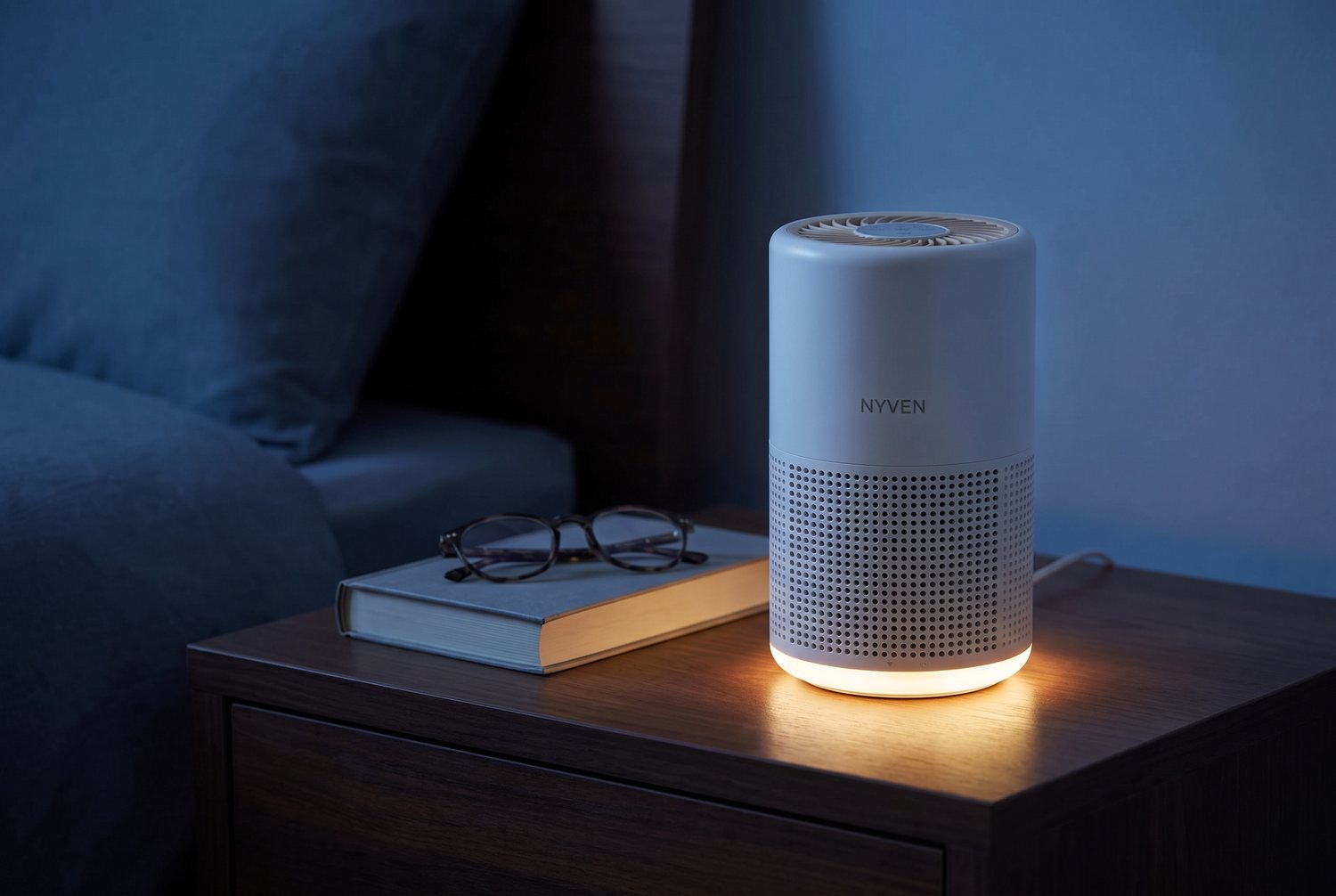
The YOMA A2. Sixty-nine ninety-nine, down from ninety-nine ninety-nine.
Here's the ledger I kept while I was deciding. The middle columns are the three things I'd already tested.
| YOMA A2 | Open windows | HVAC upgrade | $28 desk unit | |
|---|---|---|---|---|
| Up-front | $69.99 | $0 | ~$25 / filter | $28 |
| Rated coverage | 215 sq ft | whole house | whole house | ~60 sq ft |
| Air changes / hr | 5× | — | only when running | not rated |
| Runs unattended | Yes | No | Only with the system | Yes |
| Works overnight | Yes | Not in winter | Rarely | Yes |
| Noise, low | ~24 dB | silent | — | noticeable |
| Filtration | 3-stage · washable pre-filter, HEPA, carbon | none | single pleated | thin mesh |
| Handles odour | Yes · carbon stage | Yes | No | No |
| Ongoing cost | filter, every 3–6 mo | $0 | ~$25 / filter | none meaningful |
Figures in the A2 column are the manufacturer's published specifications. The other three columns are what I measured, paid, or was told by the person who services my furnace, and they describe those categories generally rather than any particular brand.
The manufacturer also publishes a percentage figure for what the filter captures. I'm going to let them make their own claims about that one. What I can tell you is what my own monitor showed, and what came off the pre-filter — which is the only evidence I actually own.
Thirty days
The short version: the spikes still happen, and the recovery is not the same.
Vacuuming still sends the line straight up — nothing prevents that. But with the A2 running on medium in the same room, the come-down went from something I measured in hours to something I measured in tens of minutes. That's the entire difference. Not a cleaner number. A faster one.
I ran it on low overnight for a month. I did not once hear it after the first two nights. At 24 dB on sleep mode it is quieter than my refrigerator, and I say that having stood in my kitchen at 1 a.m. specifically to compare them, because apparently this is who I am now.
The odour thing I was not expecting at all. I have two cats and a litter box in a hall closet, and I had genuinely stopped registering the smell — you go nose-blind to your own house, everyone does. A friend mentioned offhandedly about three weeks in that the place smelled like nothing. That's the carbon stage, and it's the one benefit I got that my $180 instrument cannot measure and had no idea to look for.
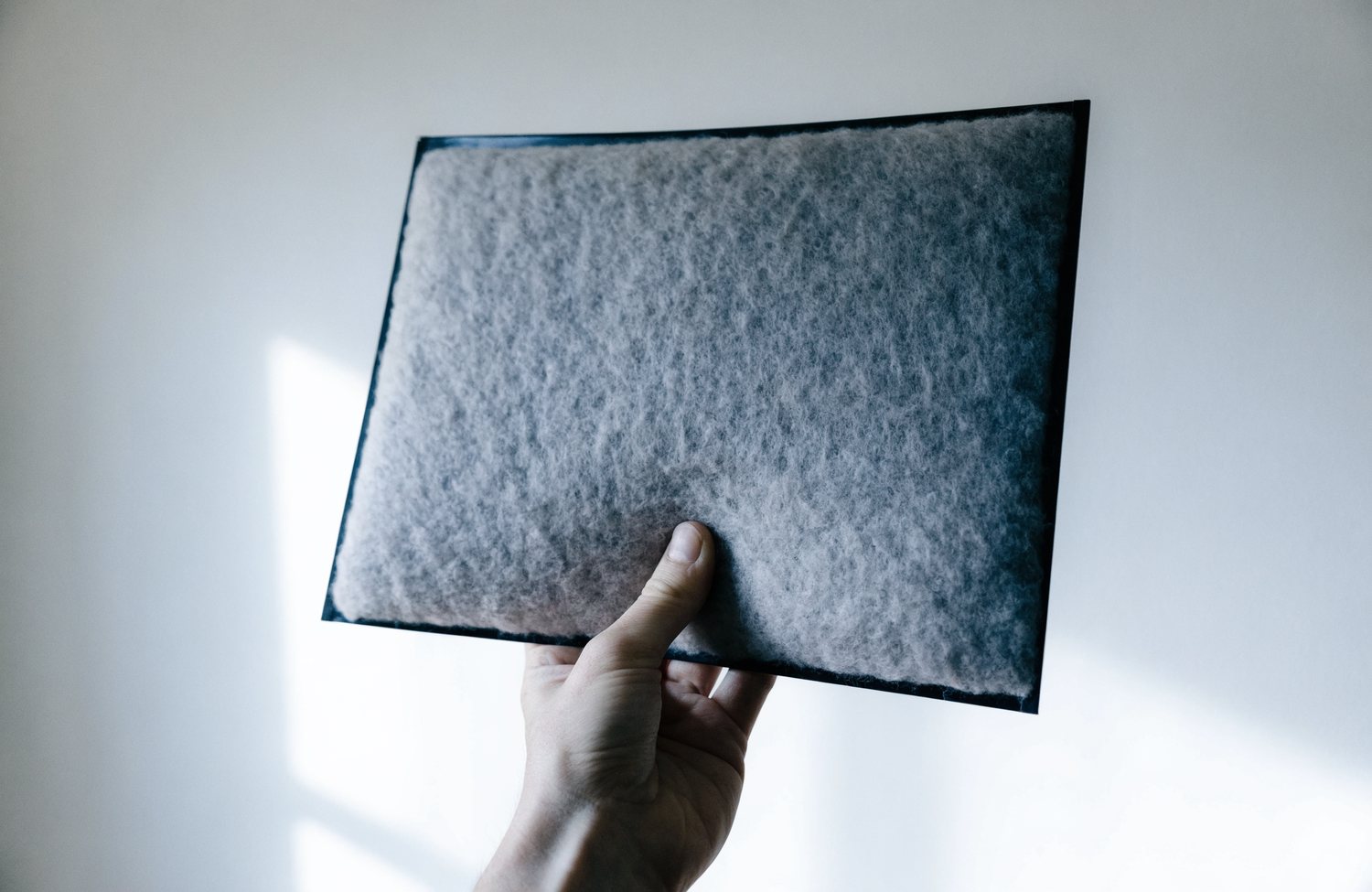
And then the pre-filter. It's washable, so you're meant to pull it and rinse it every few weeks. I pulled mine at day thirty and it was grey. Not dusty. Grey. A flat, even, felted layer of what I can only describe as house.
I'd been staring at graphs for three weeks and none of them landed the way that did.
What I don't love about it
The honest column
It's one room. 215 square feet is a bedroom or a living room, not a floor and definitely not a house. I bought a second one for the bedroom two weeks later, which means my real cost was $140, not $70. If someone tells you a single unit this size handles an open-plan downstairs, they are selling you something.
The filter is a recurring cost. Every three to six months. That's how the category works and it isn't a trick, but I'd spent the whole project congratulating myself on avoiding subscriptions and then bought a machine that quietly has one. Budget for it.
There's no sensor in it. It doesn't detect anything and it doesn't adjust itself — you pick a fan speed and it holds that speed until you change it. Pricier units have auto modes that ramp up on their own. This doesn't. I run mine on low overnight and medium when I'm cleaning, manually, and after the first week it's just a habit.
The night light is brighter than "night light" suggests. It's a warm glow, it's genuinely nice in a hallway, and one tap turns it off — but if you need a room properly dark, you'll be tapping it off every night.
And it will not fix a source. If something in your house is actively producing particles, this manages the room; it doesn't solve the cause. Mine mostly is: two cats, an old house, and a person who makes a lot of toast.
The bottom line
If you already own a purifier and you're happy, this article isn't for you.
If you've never owned one and you're not sure the category is real, what I found is that it's real but the specification is what matters — coverage rating against your actual room, and whether it runs without you. The $28 unit failed both, and cost me the price of finding out.
And if you were going to buy the monitor first the way I did: you don't have to. That was $180 spent to learn something I could have taken on faith. I don't regret it, because I'm the kind of person who needed to watch the line move. But I'd have arrived at the same place for $70 and about a month of paying attention.